

You've decided to sell your business. Maybe you've even started researching what it's worth. But now comes a question that trips up almost every seller I talk to: how do you find a broker who actually knows your industry?
This matters more than most people realize. A broker who specializes in restaurants will approach your manufacturing business completely differently than someone who lives and breathes factory floor operations. The wrong broker doesn't just slow things down. They can cost you real money by mispricing your business, marketing it to the wrong buyers, or missing the value drivers that matter most in your space.
I've seen sellers lose hundreds of thousands of dollars because their broker didn't understand the nuances of their industry. And I've seen others get premium prices because their broker knew exactly which metrics buyers cared about and how to present them. The difference almost always comes down to industry knowledge.
Here's how to find a broker who truly understands your business and can represent it the right way.
Why Industry Specialization Matters More Than You Think
Every industry has its own language. Restaurant buyers care about food cost percentages and table turnover rates. Laundromat buyers want to know about machine age and utility costs per load. Manufacturing buyers obsess over equipment condition, key customer concentration, and supply chain relationships.
A generalist broker might list your laundromat and describe it as "profitable with strong cash flow." An industry specialist will highlight that your machines are less than 3 years old, your utility costs run 18% below the market average, and your location has a 10 year lease with two 5 year renewal options. That level of detail speaks directly to what laundromat buyers actually evaluate.
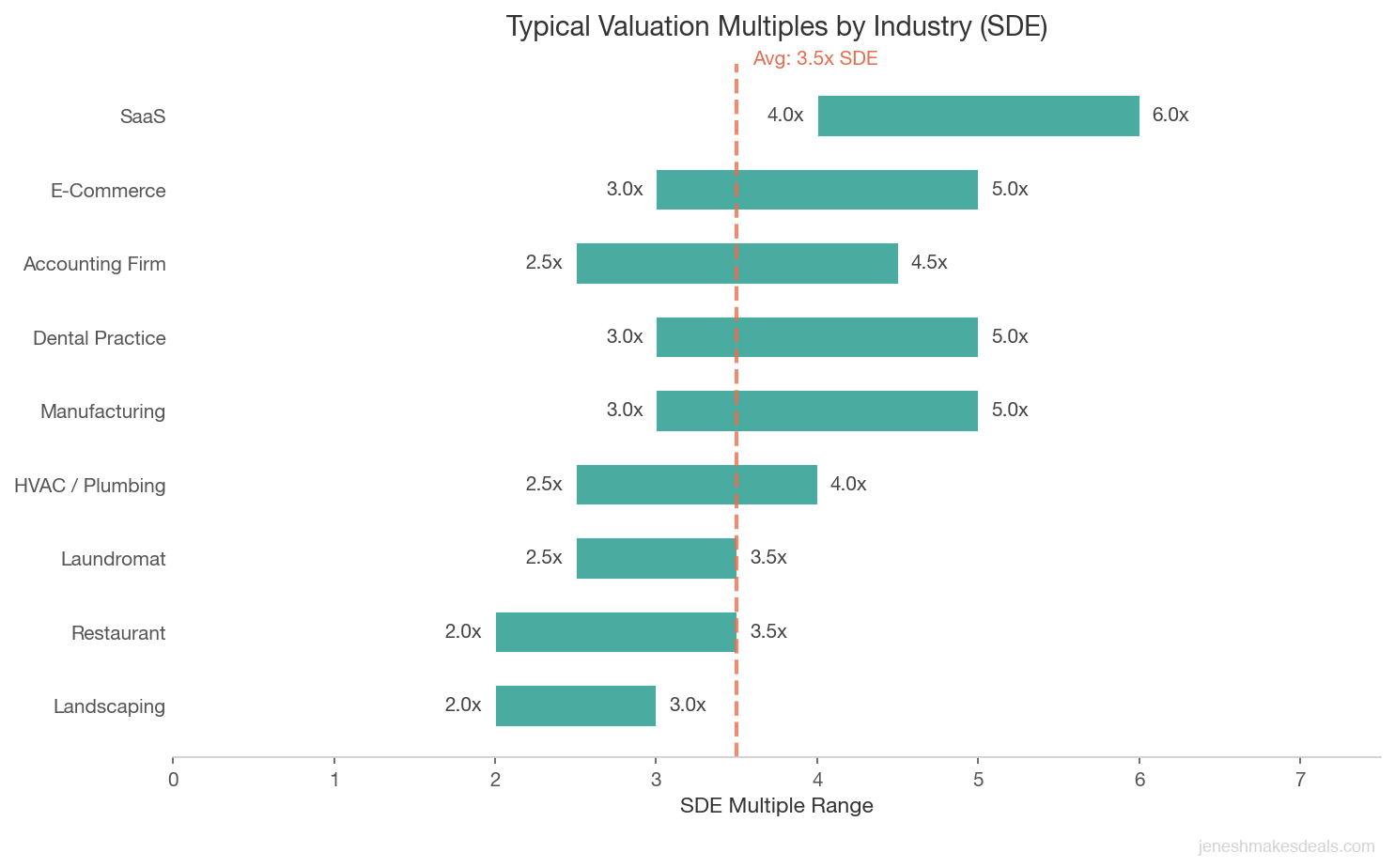
Industry specialization also affects valuation. Different industries use different multiples. A landscaping business might sell for 2x to 3x SDE, while a SaaS company with recurring revenue could sell for 4x to 6x. If your broker doesn't know the typical multiples for your industry, they might price you too high and scare off buyers, or price you too low and leave money on the table.
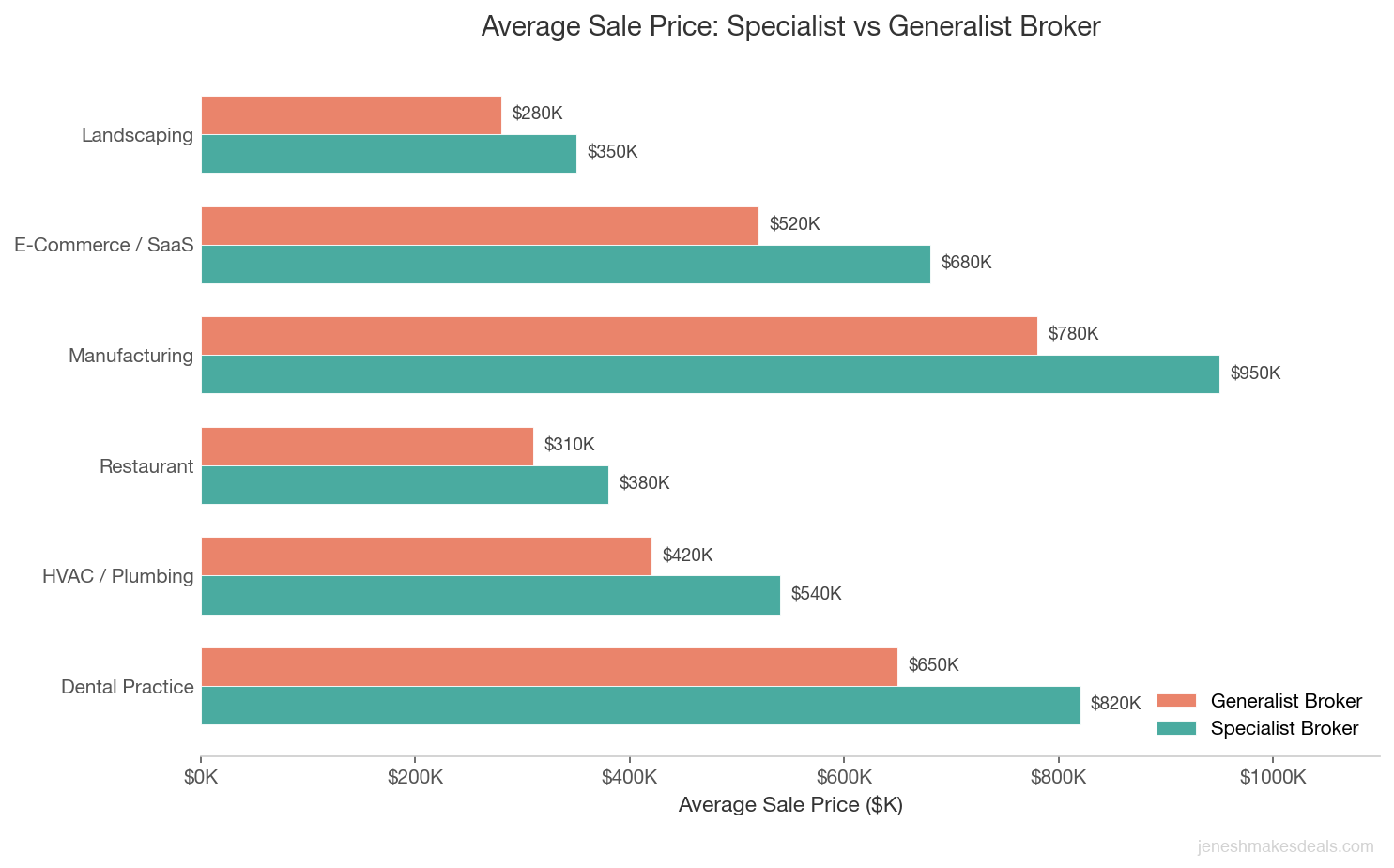
I've seen two brokers value the same HVAC company $400,000 apart. The generalist used a generic small business multiple. The specialist knew that recurring service contracts command a premium and priced it accordingly. The seller who went with the specialist closed at the higher number because it was backed by real comparable sales data.
The right broker also knows where to find qualified buyers. They have relationships with people actively looking to acquire businesses in your space. They know which private equity groups are rolling up companies in your industry. They understand what financing options work best for your type of business.
Start With Your Industry Association
Most business owners don't think of this, but your industry association is one of the best places to start. Whether you're in HVAC, food service, manufacturing, or professional services, there's likely a trade group that can point you toward brokers who have a track record in your sector.
Many industry associations maintain referral lists of service providers, including business brokers. Some even host events where brokers present. The advantage here is that these brokers have actively invested time in understanding your industry by showing up at conferences, writing articles, and building relationships with people in the space.
Ask your association's leadership directly. Say something like, "I'm thinking about selling my business in the next 12 months. Do you know any business brokers who specialize in our industry?" You'll often get two or three names, and those names tend to be the ones who have actually closed deals in your space.
If your association doesn't have formal referral lists, check the sponsor pages for their events and publications. Brokers who sponsor industry specific events are investing in that vertical, which is a good sign.
How to Evaluate a Broker's Industry Experience
Once you have a few names, it's time to dig deeper. Not every broker who claims industry expertise actually has it. Here's what to look for and what to ask.
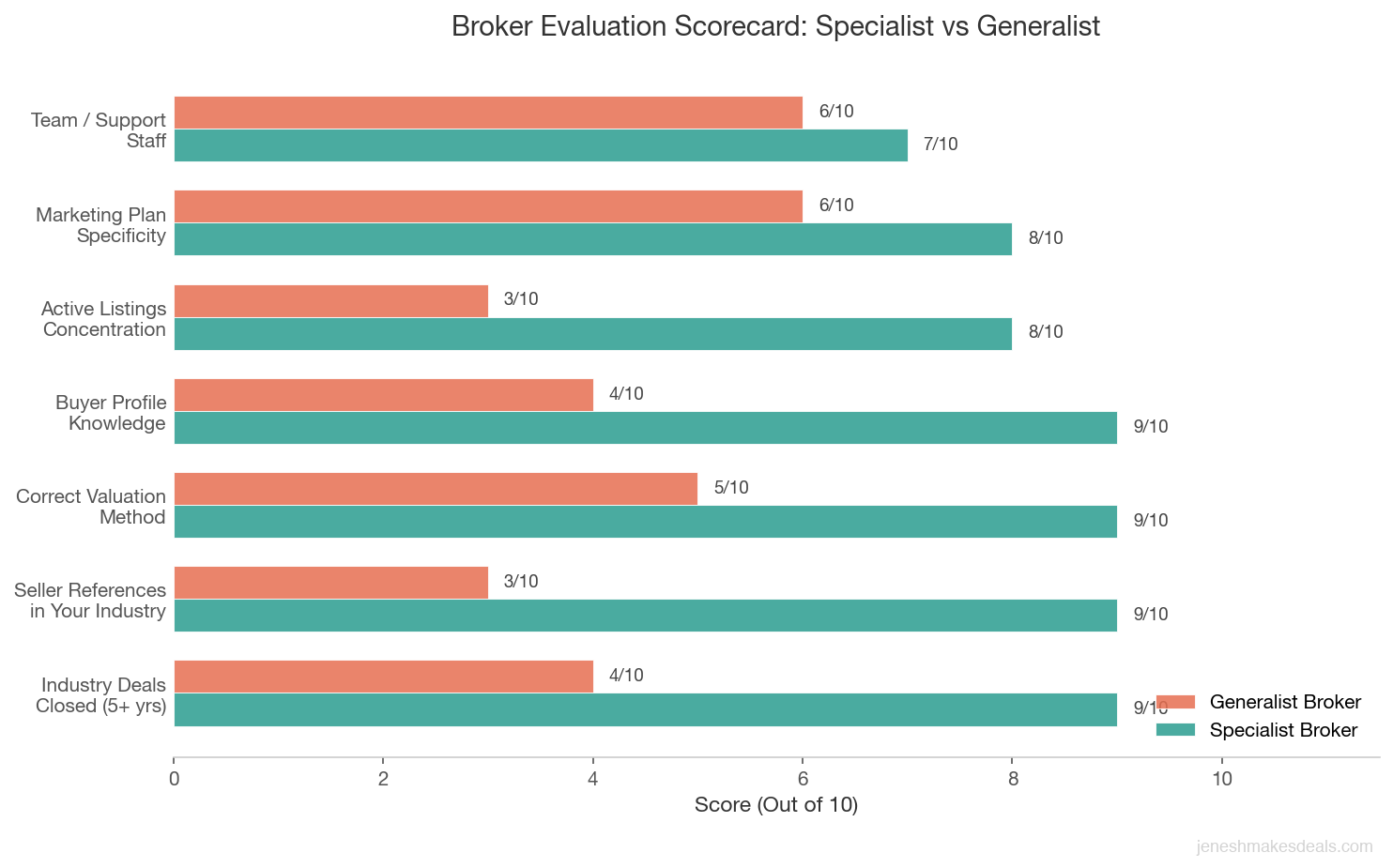
Ask how many deals they've closed in your industry. This is the most important question. You want a broker who has closed at least five to ten transactions in your specific industry over the past three to five years. A broker who sold one restaurant five years ago is not a restaurant specialist.
Ask for references from sellers in your industry. Any good broker will have past clients willing to speak with you. Talk to at least two. Ask those references how well the broker understood the business, how they handled the valuation, and whether the final sale price met expectations.
Ask what valuation method they'd use for your business. The answer tells you a lot. If you own a service business and the broker starts talking about asset based valuations, that's a red flag. If you own a manufacturing company and they only mention SDE multiples without discussing equipment values and customer contracts, they're missing key factors.
Ask who the likely buyers are. An experienced industry broker should be able to describe the typical buyer profile for your type of business. For a plumbing company, they might say, "Most buyers are either owner operators looking to grow by acquisition or private equity backed platforms doing roll ups." If they give a vague answer like "someone who wants to own a business," they don't know your market.
Check their recent listings. Look at what they're currently marketing. If a broker's active listings are all across different industries with no concentration in yours, they're a generalist. That's not necessarily bad, but it means you're not getting the deep industry knowledge that comes from specialization.
Generalist vs Specialist Brokers: When Each Makes Sense
I'll be honest. A specialist broker isn't always the right choice. Sometimes a strong generalist with great negotiation skills and a large buyer network is exactly what you need. Here's how to think about it.
Choose a specialist when:
- Your business has industry specific value drivers that require deep knowledge to explain
- Your industry uses unique valuation metrics (like revenue per machine, revenue per technician, or contract value)
- The buyer pool for your business is niche (for example, dental practices where only dentists can be the buyer of record)
- Your industry is going through consolidation and you need someone who knows the active acquirers
- Your business involves licenses, certifications, or regulatory requirements that affect the sale
Choose a generalist when:
- Your business is straightforward with standard financials and no industry specific complications
- You're in a market where no specialist brokers exist
- The generalist has significantly stronger marketing reach and buyer databases than available specialists
- Your business could appeal to buyers from multiple industries (like a warehousing or distribution company)
In most cases, I lean toward specialists. The value they bring in pricing, marketing, and buyer matching typically outweighs the broader reach of a generalist.
Need help figuring out what your business is worth? Use our free business valuation calculator to get a quick estimate based on your industry's typical multiples.
Red Flags to Watch For When Interviewing Brokers
Not every broker deserves your business. I've seen sellers get burned by brokers who overpromise, underdeliver, or simply don't have the skills to close a deal. Watch for these warning signs.
They quote a sale price before seeing your financials. Any broker who tells you what your business is worth before reviewing at least two to three years of tax returns and profit and loss statements is guessing. And guessing high to win your listing is one of the oldest tricks in the book. You end up overpriced, sitting on the market for months, and eventually selling for less than you would have with a realistic price from the start.
A broker who inflates your valuation to win your listing is not doing you a favor. Overpriced businesses sit on the market, develop a reputation as stale listings, and almost always end up selling for less than they would have if priced correctly from day one. The best brokers tell you what you need to hear, not what you want to hear.
They can't explain their marketing plan. Ask how they'll market your business. If the answer is "we'll put it on BizBuySell and wait for inquiries," that's not a plan. A good broker should describe targeted outreach to qualified buyers, use of multiple listing platforms, direct marketing to their buyer database, and outreach to industry specific buyer groups.
They have no support staff. Selling a business involves a lot of coordination. A solo broker handling 20 listings with no assistant or team support is going to drop balls. Ask about their team structure and who handles day to day communication.
Their listing agreement is unusually long. Standard exclusive listing agreements run 6 to 12 months. If a broker wants 18 to 24 months exclusively, that's excessive. It also suggests they're not confident they can sell your business in a reasonable timeframe.
They don't ask tough questions. A good broker will ask about potential deal killers early: customer concentration, lease issues, pending lawsuits, environmental concerns, key employee risk. If a broker just nods and says everything sounds great without digging into potential problems, they'll be caught off guard when buyers discover those issues during due diligence.
Questions Every Seller Should Ask Before Signing
Before you sign a listing agreement, have a direct conversation covering these topics. The answers will tell you whether this broker is the right fit.
| Question | What a Good Answer Sounds Like |
|---|---|
| How many businesses in my industry have you sold? | "I've closed 12 deals in your space in the past 3 years" |
| What's the typical timeline for selling a business like mine? | A specific range with reasoning, like "6 to 9 months based on your size and industry" |
| What valuation multiple do businesses like mine typically sell for? | A specific range with recent examples |
| How do you find buyers for businesses in my industry? | Description of targeted channels and existing relationships |
| What's your commission structure? | Clear explanation, typically 8% to 12% for businesses under $1 million |
| What happens if the business doesn't sell? | Honest discussion about relisting, price adjustments, or agreement termination |
| How many active listings do you currently have? | A manageable number, usually under 15 for a solo broker |
| Will I work directly with you or someone on your team? | Clear answer about who your day to day contact will be |
Take notes during these conversations. Compare the answers across multiple brokers. The best brokers will give specific, experience based answers rather than generic promises.
How to Find Brokers in Specific Industries
Different industries have different paths to finding the right broker. Here are some of the most common ones I work with.
Restaurants and food service. The restaurant brokerage world is one of the most specialized. Look for brokers who are members of the Business Brokers of Florida, the California Association of Business Brokers, or national groups like the International Business Brokers Association (IBBA) who have restaurant transaction experience. Many restaurant brokers also have backgrounds as restaurant owners or operators themselves.
Manufacturing. Manufacturing deals are more complex because they involve equipment appraisals, real estate, customer contracts, and workforce considerations. Look for brokers affiliated with the IBBA or the M&A Source who have completed the Certified Business Intermediary (CBI) designation. Manufacturing brokers often come from operations or engineering backgrounds.
Service businesses (HVAC, plumbing, landscaping, cleaning). These are some of the hottest industries for acquisitions right now, especially with private equity roll ups. Look for brokers who have relationships with the PE groups active in your space. Many service business brokers focus specifically on home services and can show you recent comparable sales.
Professional practices (dental, medical, veterinary, accounting). These require specialized brokers because licensure requirements limit who can buy. Practice brokers are a distinct category. They understand goodwill vs tangible assets, patient or client transition, and the unique financing available for practice acquisitions.
E-commerce and online businesses. Online business brokerage is its own world. Firms like Quiet Light, FE International, and Empire Flippers specialize in this space. They understand SaaS metrics, traffic analytics, supplier relationships, and the digital due diligence process that's unique to online businesses.
Ready to talk about selling? Contact us for a free consultation and we'll help you identify the right broker for your industry.
The Interview Process: What to Expect
Plan to interview at least three brokers before making a decision. Here's a typical process that works well.
Initial call (15 to 20 minutes). This is a screening conversation. Share the basics: your industry, approximate revenue, and general timeline for selling. The broker should ask smart questions and demonstrate familiarity with your space. If the call feels generic, cross them off the list.
In depth meeting (60 to 90 minutes). This is where you share more detail about your business. Bring your last three years of tax returns, a current profit and loss statement, and a list of major assets. The broker should walk you through their preliminary valuation thoughts, their marketing approach, and their typical deal timeline. This meeting should feel like a consultation, not a sales pitch.
Reference checks (1 to 2 hours total). Call the references. Ask specific questions about the broker's industry knowledge, communication style, negotiation skills, and whether the final outcome matched expectations.
Review the listing agreement. Before signing anything, have your attorney review the listing agreement. Pay attention to the exclusivity period, commission rate, carve outs for buyers you bring yourself, and the termination clause. These terms are negotiable.
The whole process from first call to signed agreement typically takes two to three weeks. Don't rush it. Finding the right broker is one of the most important decisions you'll make in the entire sale process.
What a Good Broker Relationship Looks Like
Once you've selected your broker, here's what a healthy working relationship should feel like.
You should get regular updates, at minimum every two weeks, even if there's nothing new to report. No news is still worth communicating. A broker who goes silent for a month is either overwhelmed or has lost focus on your listing.
Your broker should be honest with you about market feedback. If buyers are consistently saying your price is too high, your broker should tell you directly rather than just saying "we need more time." If there's an issue with your business that's scaring off buyers, a good broker will bring it up and help you address it.
You should feel like a priority, not an afterthought. If your broker takes more than 24 hours to return calls or emails during active negotiations, that's a problem. Deal momentum matters, and slow responses can kill deals.
Your broker should be proactive about preparing you for due diligence. The best brokers start organizing your documents and addressing potential issues before a buyer even shows up. That way, when an offer comes in, you're ready to move quickly and confidently.
Common Mistakes Sellers Make When Choosing a Broker
Let me share the mistakes I see most often so you can avoid them.
Choosing based on the highest valuation. Some brokers will quote an inflated price to win your listing. This feels great for about a month until you realize no buyers are biting. Always ask for the data behind the valuation. Comparable sales, industry multiples, and market conditions should support the number.
Going with the lowest commission. A broker charging 6% who gets you $800,000 nets you less than a broker charging 10% who gets you $1 million. Focus on the broker's ability to maximize your sale price, not on saving a couple percentage points in commission.
Not checking for conflicts of interest. Some brokers represent both buyers and sellers. This is legal in most states, but it can create problems if the broker has a buyer in their network they're incentivized to steer toward your deal. Ask directly whether they practice dual agency and how they handle it.
Signing without understanding the listing agreement. I've talked to sellers who didn't realize their listing agreement prevented them from selling to a buyer they already knew, or that the exclusivity period auto renewed for another 12 months. Read every word of that agreement.
Choosing a friend or family referral without vetting them. Your accountant's brother in law might be a great broker. Or he might be terrible. Vet him the same way you'd vet any other candidate. Personal relationships don't guarantee professional competence.
The biggest mistake I see sellers make is treating the broker selection like a quick decision. You're trusting this person with what might be the largest financial transaction of your life. Spend two to three weeks interviewing candidates. The time you invest upfront will pay for itself many times over at the closing table.
Need help figuring out what your business is worth? Use our free business valuation calculator to get a quick estimate before you start talking to brokers.
The Bottom Line
Finding the right broker for your industry is about matching expertise to your specific needs. Start with your industry association, interview at least three candidates, check references, and pay attention to how well they understand the nuances of your business.
The best broker for your neighbor's accounting practice might be completely wrong for your landscaping company. That's not a flaw in the system. It's how specialization works. The broker who closes the best deals in your industry is the one who speaks your language, knows your buyers, and understands what makes businesses like yours valuable.
Take the time to find that person. The difference between a good broker and the right broker can be hundreds of thousands of dollars in your pocket at closing.
Ready to sell your business? Contact us for a free consultation and I'll help you figure out the best path forward for your specific industry and situation.
Want a quick estimate of your business value? Try our free valuation calculator to see where you stand before you start interviewing brokers.
Related Articles

April 29, 2026
Selling a Franchise Business vs an Independent Business
Selling a franchise is a fundamentally different process than selling an independent business. Here is what every franchise owner needs to know.

April 21, 2026
What Is a Management Buyout and Is It Right for Your Business?
A management buyout lets your team buy the business. Learn how MBOs work, what they cost, and when they make sense for sellers.

March 27, 2026
How to Find Businesses for Sale in 2026
Most buyers search the wrong places. Here's where to actually find businesses for sale and how to avoid wasting months on dead ends.
About the Author
Jenesh Napit is an experienced business broker specializing in business acquisitions, valuations, and exit planning. With a Bachelor's degree in Economics and Finance and years of experience helping clients successfully buy and sell businesses, he provides expert guidance throughout the entire transaction process. As a verified business broker on BizBuySell and member of Hedgestone Business Advisors, he brings deep expertise in business valuation, SBA financing, due diligence, and negotiation strategies.
You might also be interested in
Free Business Calculators
Try our business valuation calculator and ROI calculator to estimate values and returns instantly.
How to Buy a Business Guide
Download our comprehensive free guide covering everything you need to know about buying a business.
Our Services
Explore our professional business brokerage services including valuations and buyer representation.
More Articles
Browse our complete collection of business brokerage insights and expertise.